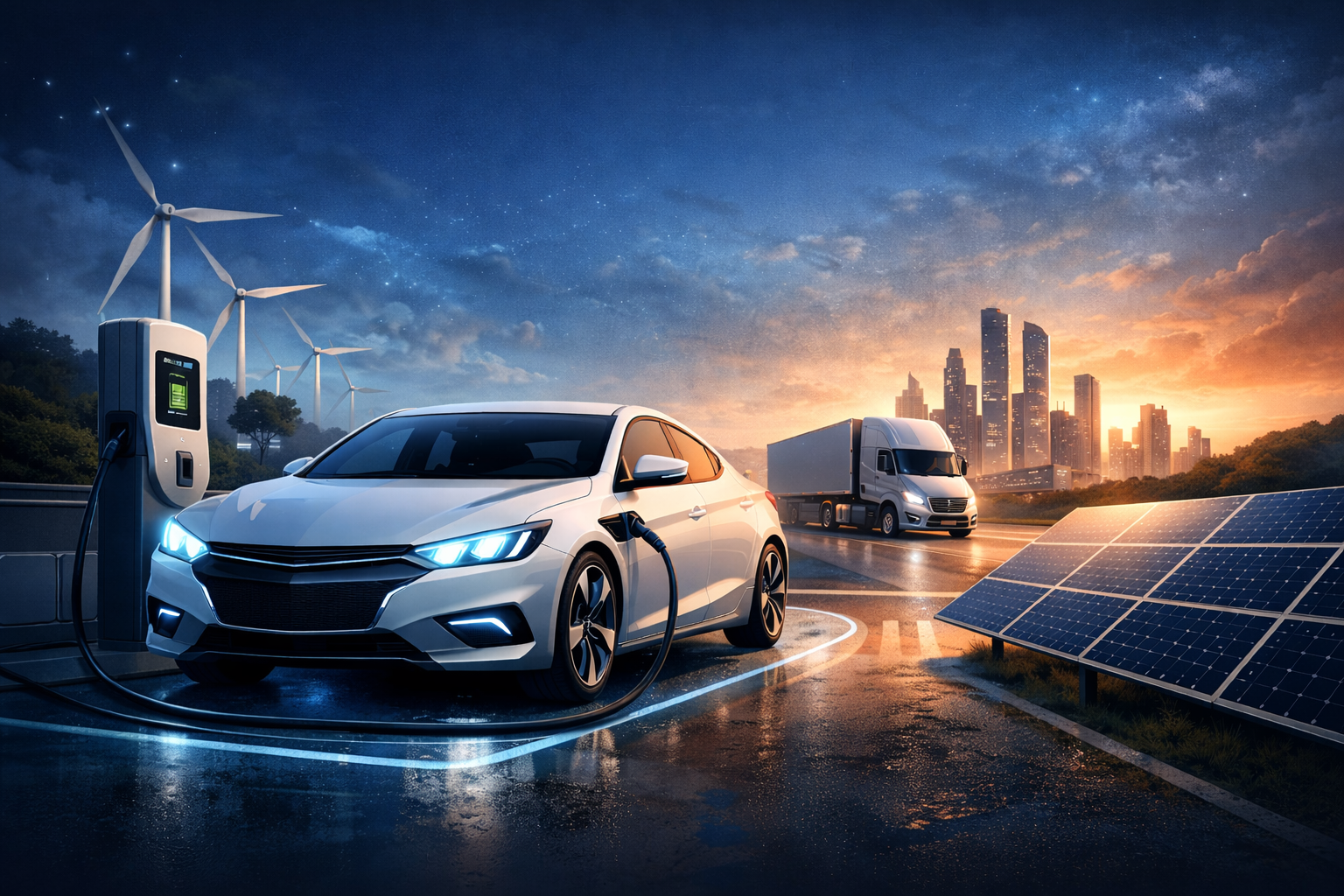
How Electric Vehicles Are Reshaping the Automotive Industry
The automotive industry is a $3 trillion global market — and it is being rebuilt from the drivetrain up. EVs are not just replacing engines. They are dismantling 100-year-old supplier relationships, rewiring the aftermarket parts economy, and creating entirely new B2B ecosystems around charging infrastructure, battery materials, and software-defined vehicles.
In 2015, a traditional Tier 1 automotive supplier generating 80% of its revenue from internal combustion engine (ICE) components was in a comfortable position. By 2024, that same revenue profile represents an existential risk. The ICE component market is not declining — it is being discontinued on a government-mandated timeline.
The EU has legislated a ban on new ICE vehicle sales by 2035. The US Inflation Reduction Act allocated $369 billion toward clean energy and EV incentives. For B2B companies across the automotive value chain, the question is no longer whether the shift is happening — it is whether your product portfolio and outreach strategy are aligned with where the money is going.
The ICE-to-EV Transition Is Eliminating Thousands of Components
A conventional ICE vehicle contains approximately 30,000 individual parts. A battery electric vehicle (BEV) contains closer to 10,000. The mechanical complexity that sustained decades of Tier 2 and Tier 3 supplier businesses largely does not transfer to the EV platform.
| Component Category | ICE Status | EV Status |
|---|---|---|
| Exhaust systems (mufflers, catalytic converters) | Eliminated | Not applicable |
| Multi-speed automatic transmissions | Eliminated | Single-speed reducer replaces |
| Fuel injection & fuel tank systems | Eliminated | Battery pack replaces |
| Battery Management Systems (BMS) | Not present | Core new component |
| Power electronics (inverters, onboard chargers) | Not present | Core new component |
| High-voltage wiring harnesses | Not present | Core new component |
| Brakes, tires, body, glass, HVAC | Continuing | Continuing (+ regen braking) |
Battery Technology: The Battlefield for B2B Suppliers
The battery pack represents 30–40% of an EV's total cost — making battery technology the single most strategically important component in the entire EV value chain. China currently controls approximately 75% of global lithium-ion battery production capacity, with CATL alone holding over 35% global market share.
This dominance has prompted major Western economies to invest heavily in domestic battery production. The US IRA, EU Battery Regulation, and Canada's Critical Minerals Strategy are all explicitly designed to rebalance this supply chain.
— P2B Services Automotive IntelligenceBattery Trends Creating B2B Opportunities Now
LFP vs NMC Competition
OEMs are actively sourcing both LFP (cheaper, longer cycle life) and NMC (higher energy density) chemistries — creating parallel supplier opportunities simultaneously.
Solid-State Development
Toyota, Samsung SDI, and QuantumScape advancing solid-state batteries. Volume production 3–5 years away but the electrolyte materials supply chain is being built right now.
Battery Recycling & Second-Life
Tightening end-of-life regulations globally. Companies in recycling, refurbishment, and second-life stationary storage are entering a high-growth period.
Gigafactory Supply Chains
Every new gigafactory requires an entirely new local supply chain for raw materials, equipment, facility services, and logistics. These contracts are being awarded now.
Charging Infrastructure: The B2B Market That Dwarfs the Vehicle Market
The total investment required to build global EV charging infrastructure is estimated at $100 billion annually through 2040. This is a B2B market — not a consumer market. The buyers are utility companies, property developers, fleet operators, municipalities, and commercial real estate owners.
The US alone needs to expand from approximately 160,000 public charging ports today to 1.2 million by 2030. The gap between current infrastructure and projected need is one of the largest infrastructure investment opportunities in a generation.
Charging Infrastructure Opportunity Map
- Level 2 Commercial Charger Installation: Hotels, offices, retail centers, and multifamily residential properties are under increasing tenant pressure to provide EV charging. Electricians and electrical contractors are in high demand.
- DC Fast Charging Networks: Highway corridor charging requires massive grid interconnection projects. Transformer manufacturing, grid upgrade services, and high-power cable infrastructure companies are strategically positioned.
- Fleet Depot Charging Solutions: Commercial fleet operators need depot charging capable of handling hundreds of vehicles simultaneously — requiring custom load management software and high-capacity electrical installations.
- Energy Management Software: Smart charging platforms that optimize schedules around grid demand, time-of-use pricing, and vehicle departure times are a rapidly growing SaaS category within the EV ecosystem.
Fleet Electrification: The Fastest-Moving B2B Segment
While consumer EV adoption debates dominate headlines, commercial fleet electrification is moving faster and with more predictability. Corporate sustainability commitments, government mandates for public sector fleets, and improving EV total cost of ownership are driving fleet operators to accelerate electrification timelines dramatically.
Who Is Buying Fleet Electrification Solutions Right Now
- Last-mile delivery companies — logistics, e-commerce fulfillment, courier services
- Municipal transit authorities — electric bus procurement and depot infrastructure buildout
- Corporate campuses and facilities managers — employee shuttle fleets and facilities vehicles
- Rental car companies — Hertz and Enterprise actively expanding EV fleet percentages
- Construction and industrial operators — electric forklifts, construction vehicles, and mining EVs
Reaching fleet decision-makers requires precise targeting of Fleet Directors, Sustainability Officers, and VP of Operations at mid-to-large fleet operators. A properly segmented automotive and fleet B2B contact list is the foundation of that outreach.
The Software-Defined Vehicle: Automotive Is Becoming a Tech Industry
Tesla demonstrated that a car's performance, range, and features could be updated over-the-air (OTA) — fundamentally changing the vehicle's relationship with its manufacturer post-sale. Traditional OEMs are now racing to replicate this. VW's CARIAD division, GM's Ultifi platform, and Stellantis's STLA Brain architecture represent billions in investment toward making software — not the powertrain — the primary differentiator.
Automotive Cybersecurity
Connected vehicles are attack surfaces. UN R155 mandates cybersecurity management systems for new vehicles in major markets. A fast-growing B2B niche.
Embedded Software Dev
OEMs face acute shortages of engineers with both automotive systems knowledge and modern software development skills. Talent and training services are in demand.
Data Monetization Platforms
EV data — charging patterns, driving behavior, grid interaction — has commercial value. Companies building this data infrastructure operate at automotive-data analytics intersection.
V2G Technology
Vehicle-to-Grid bidirectional charging allows EV batteries to supply power back to the grid during peak demand. Nascent but rapidly developing B2B market at the automotive-utility crossover.
Effective B2B email marketing in the automotive sector requires lists that reflect these new buyer personas — not legacy directories built around ICE industry org structures that no longer match the actual decision-making landscape.
Common Mistakes Automotive B2B Companies Make During the EV Shift
❌ Waiting for customer pull instead of creating category awareness. If your EV-applicable product isn't on a procurement team's radar before they issue an RFQ, you're already behind. Proactive outreach to electrification teams 12–18 months before procurement cycles is the winning strategy.
❌ Treating EV OEMs the same as legacy OEMs. Tesla's procurement process, timeline, and decision criteria are fundamentally different from Ford's or GM's. Applying your existing automotive sales playbook without modification to EV-first manufacturers will consistently underperform.
❌ Ignoring the geographic dimension of EV investment. Battery gigafactories, charging network buildouts, and EV manufacturing plants are highly geographically concentrated. Companies that identify where investment is flowing and focus their outreach accordingly will find far more receptive buyers.
Ready to Reach EV & Automotive Decision-Makers?
Verified, current contacts across automotive OEMs, fleet operators, EV charging infrastructure developers, and automotive supplier decision-makers — updated for the EV era, not the ICE one.
Get A Free Quote →The components going away are known. The new ones being created are known. The buyers are identifiable and reachable. What separates companies that capture this opportunity from those that watch it pass is the quality of their data, the precision of their targeting, and the relevance of their outreach. Reach out to P2B Services today and explore how we can power your automotive B2B lead generation strategy.
Recent Blogs
-

How to Penetrate into
West African Market and the Strategies? -

How is technology changing
the insurance industry? -

Why Nurse Email Lists Are Essential
for Healthcare Marketing -

How to Effectively Pitch
Marketing Services to Doctors -

How to Choose the Best
B2B Mailing List :7 Essential Qualities -

How Blockchain Changing
the Banking Sector ? -
10 Most Popular Software’s
Used in Healthcare -
How AI is Transforming Businesses
in the Oil and Gas Industry -
Seven Proven steps to Retain Customers
with customer win-back campaigns -

Learn Essential Sales negotiation
skills and strategies to win more deals! -

Missing out on quick sales? Unlock
the mystery of transactional selling! -
What Is Lead Nurturing
and Why Is It Important ? -

35 Essential Sales Terms
you need to know -

The Essential Guide to C-suite
Marketing? Tips & Strategies -

Top 10 Fastest Growing Industries
for 2024 in the United States -

Why Human Resources
Management is Important? -
How to Use the 5 Senses to
Increase Sales in Retail Industry -
What Is Data Cleansing, Why Is
It Important, And How Can You Do It? -

10 Effective Marketing Strategies for
Food & Beverage Industry -
Best Marketing Strategies & Tips for
Oil & Gas Industry Sector -

Why Email Marketing is very effective
for Healthcare Businesses -

Top 10 Most Effective Fintech
Marketing Strategies for 2024 & Beyond -

Effective Email Follow Up
Strategies To Get More Sales -
Best ways to Segment
B2B Target Audiences -

The 5 cutting-edge waves of
innovations shaping tomorrow -

Best Strategies for Effective
Email Marketing in The Aviation Industry -

Best Practices to Grow
Your B2B Podcast -
Generating B2B Leads on
LinkedIn – Strategies for 2023 -

B2B Email Marketing: Best Practices
& Proven Strategies -
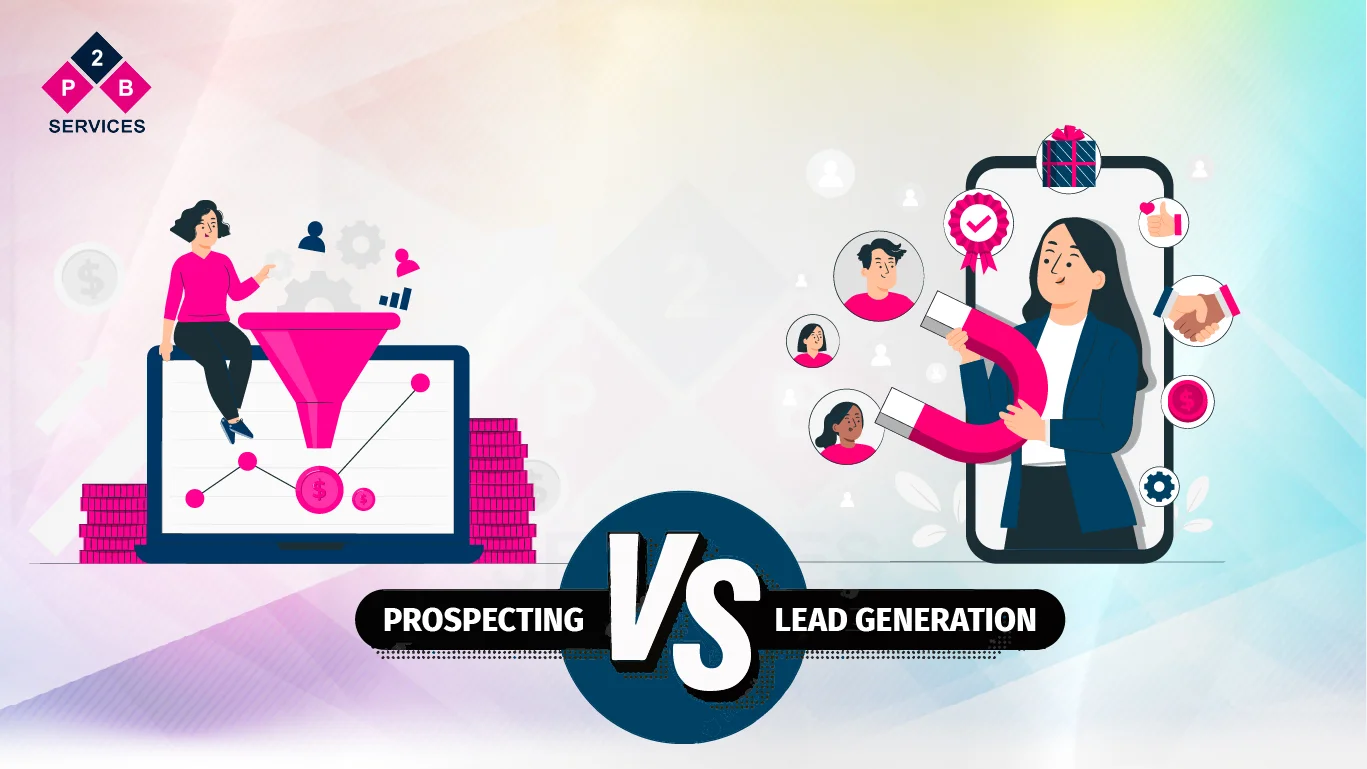
Prospecting vs Lead Generation
-
A Guide to Outbound Lead Generation
Strategies That Work -

Top 5 B2B Lead Generation
Companies in India -

What is Data Validation
and Why is it Important? -

Top 10 Healthcare
Data Providers & Companies in 2023 -
5 Effective Partnership Email
Templates for B2B Businesses -

Why Data Verification is Crucial
for Decision-Making and Strategy ? -
What companies use AWS ?
-
A Complete Guide to Creating
a B2B Database -

Learn How to Create Visually
Attractive Emails -

How to Generate More Leads for
Your Travel Business ? -

8 Ways to Get Real Estate Agents’
Email Address Easily -
How ERP is Capitalizing
Business Management in Industries ? -
The Ultimate Guide to B2B
Manufacturing Marketing Strategy -

How to Write best B2B
Email Subject Lines -

Effective B2B Lead Generation
Tips for Sales Success! -

Pros & Cons of Buying an Email
List for Your Business in 2023 -

How To Acquire Clients for
Your Transport Business -
Understanding Data Licensing in 2023
-

HR Manager’s Email Address
How to Find It -

How to Pitch Retailers
Through Email -
Email Marketing
B2b Lead Generation -

How To Find
CEO Email Addresses -

How to Write Effective
B2B Emails -

How to Plan And
Deliver The World Class Summit in 2023 -

How To Reach
Top Business Decision Makers Easily -
Best Guide to
B2B Demand Generation in 2023 -

How to Build & Scale
Your Consulting Business -

How to Pitch and Sell with a CFO
-
How can I get a list of ceo email address
-

Top 13 travel & Tourism
email list providers in the World -

How To Find And Buy
A B2B Email List 
The Ultimate Guide for
data appending in 2022-

9 best techniques
for your event marketing strategy 
Marketing Strategy Of
The Automobile Industry
9 Reasons To Buy
For Manufacturing Industry Email List
How To Grow Your Email Database 2022
-

Email Marketing Tips
That Will Get You More Leads -

B2B Lead
Generation Strategy Trends for 2022 -
10 Reasons
Why You Will Love B2B Email List -

Want to Know All Things About Events?
You Need To Read This First 
Best Way To Improve Your
Marketing And Sales-

COVID-19 Effects on
Small Businesses & How to overcome -
How Do We Improve Your Brand Growth
-

How Accurate Email Data
can improve your Prospecting process
Post Your Comment

Recent Posts
How To Build a Sales Pipeline to Get More Deals?
How AI is Transforming Businesses in the Oil and Gas Industry
The 5 cutting-edge waves of innovations shaping tomorrow
Top 10 Fastest Growing Industries for 2024 in the United States
How to Choose the Best B2B Mailing List: 7 Essential Qualities
Effective B2B Lead Generation on LinkedIn
B2B Email Marketing: Best Practices & Proven Strategies
Prospecting vs. Lead Generation: Key Differences and Benefits
Learn Essential Sales negotiation skills and strategies to win more deals!
The Essential Guide to C-suite Marketing? Tips & Strategies
Archives
January 20, 2025
Tags
- Electric Vehicle Trends
- Automotive Industry EV
- Fleet Electrification
- EV Supply Chain
Category
- Industry Trends
- B2B Marketing
- Lead Generation
 8296439334